Impact

American Forest Standard (AFS);
Partnering with builders who care.

A warning from History

England’s deforestation serves as a stark warning for the United States, where unsustainable practices could lead to similar outcomes. By acting now with responsible forestry and certified building standards, America can avoid repeating the same mistakes, and ensure future generations inherit thriving, resilient forests.

Learning From England’s Deforestation Crisis

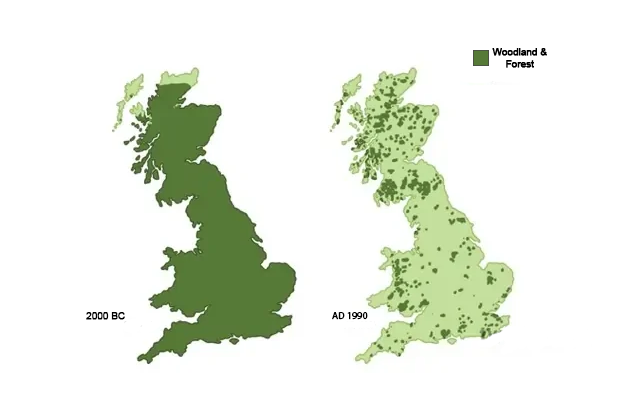
Thousands of years ago, over 80% of England was blanketed in dense, native forests. But with the rise of agriculture, industry, and unchecked development, that number plummeted falling to just 5% by the early 1900s. As centuries of industrialization, war, and unchecked development stripped the nation bare.

Today, only 13.2% of England’s land remains forested, and much of that is non-native plantation.
It is one of the least forested countries in Europe—a sobering reminder of what happens when extraction is prioritized over restoration.

English Countryside

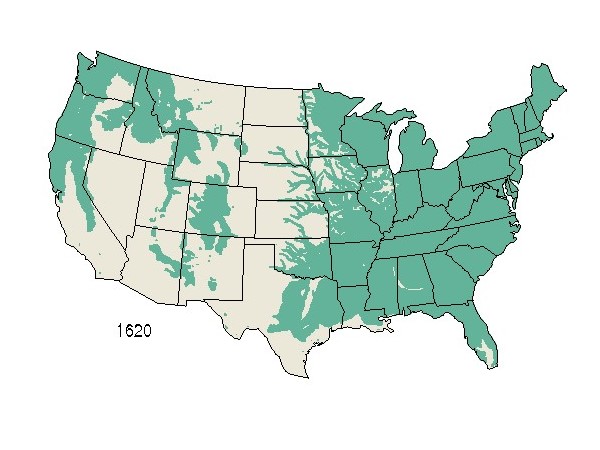
Historical Forest Coverage:
A Stark Comparison

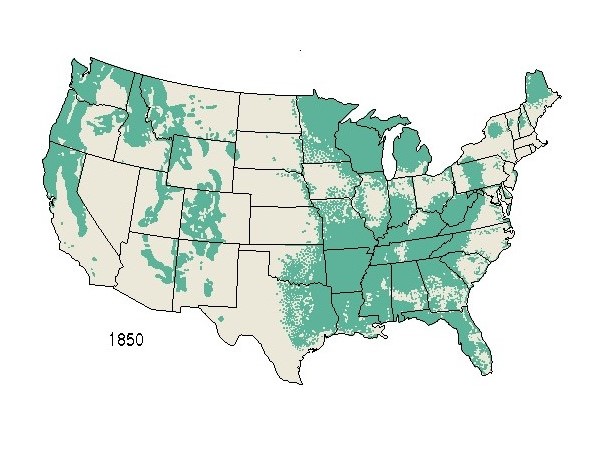
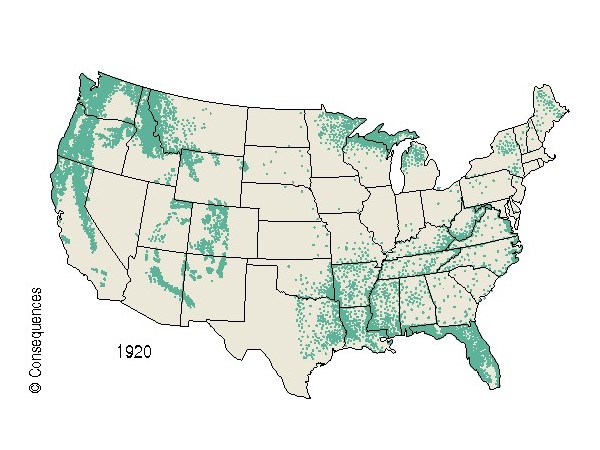
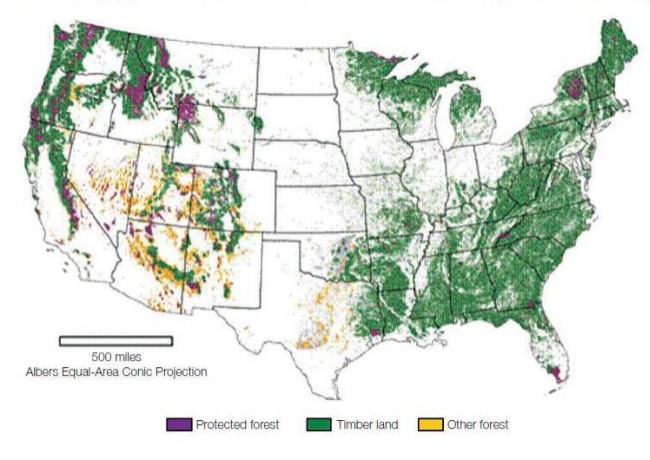
The United States was once a land of trees. In 1630, over 46% of U.S. land was forested. Today, we hover at just over 33% a loss of over 300 million acres.

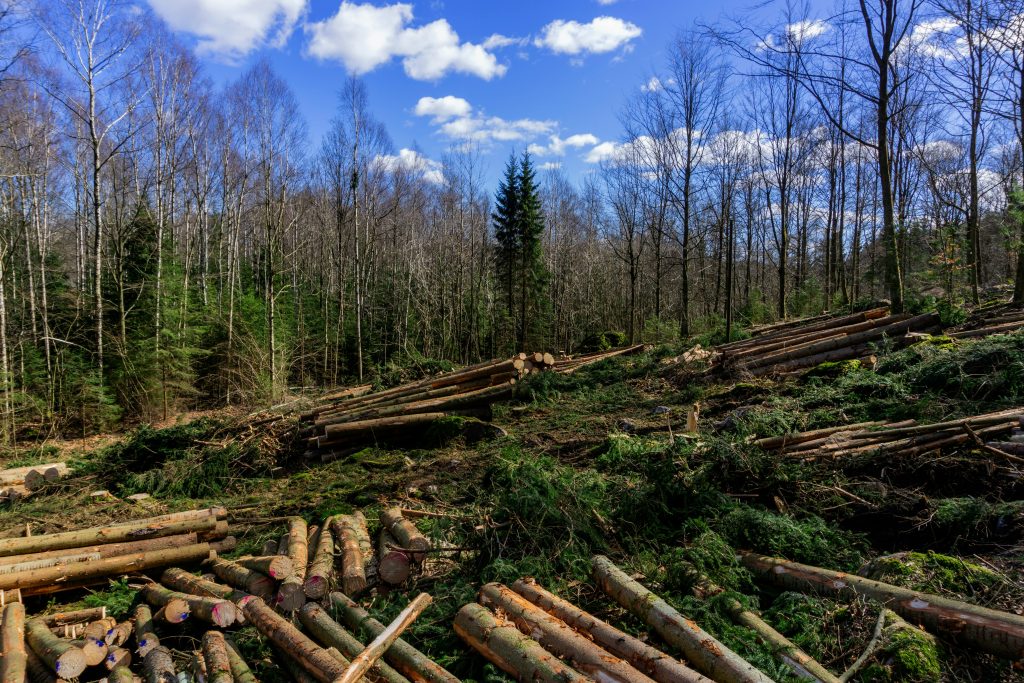
Much of this decline was driven by unregulated logging, urban sprawl, and poor forest management. While we’ve made strides in conservation, a dangerous new trend is emerging.

Unchecked Deforestation doesn't just harm landscapes

It contributes to:

  • Climate change acceleration (trees absorb 15.6% of all U.S. carbon emissions)
  • Increased wildfire risk
  • Loss of biodiversity and wildlife habitat
  • Rising construction and energy costs due to ecosystem disruption

Why We Must Replant What We Remove

In March 2025, a new federal mandate under President Trump ordered the immediate expansion of American timber production. This directive calls for the acceleration of logging on federal lands and streamlining of environmental approvals. While this may help reduce reliance on foreign timber and boost the economy, it comes with a warning: if we do not replant what we cut, we risk repeating the mistakes of the past.

DIRECT
TREE-FOR-TREE ACCOUNTABILITY

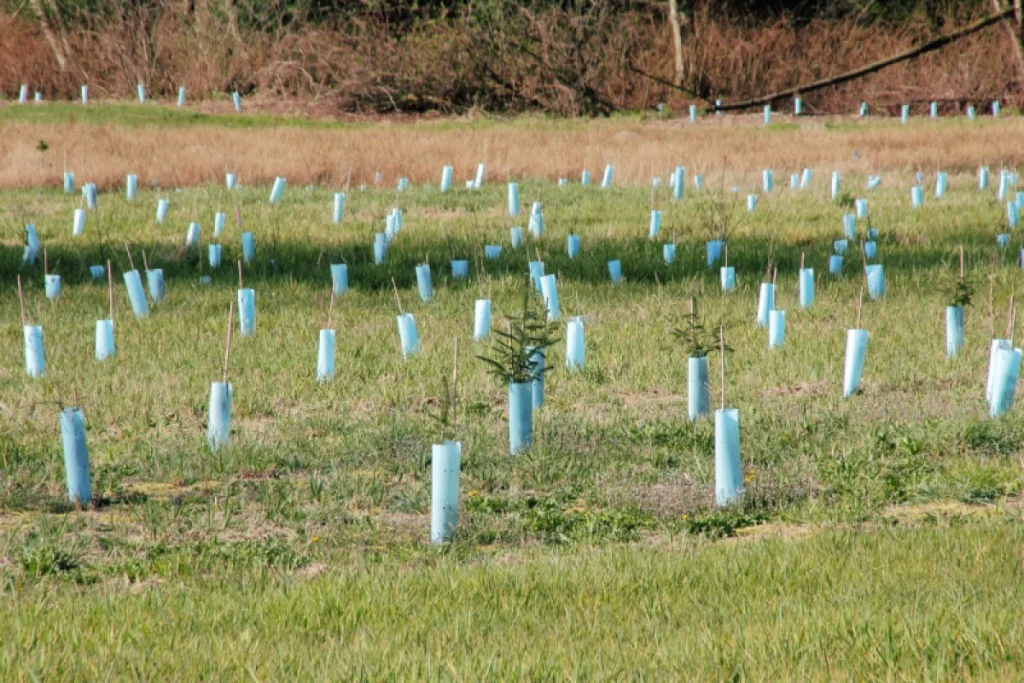
“For every tree used to build a home, we plant one back and you can prove it.”

Unlike FSC/SFI (which deal in supply chain ethics), AFS calculates tree usage per home and offsets it with real, verified tree planting

  • We’re the first certification that directly links lumber use to environmental repair—not in theory, but by action.

Builder Benefit:

  • Turns a standard home into a regenerative product.

Offers a simple narrative: “This house replanted the forest it came from.”

Our Solution

American Forest Standard (AFS) partners with builders who care. For every project certified, trees are planted to offset the wood used, making homes carbon-responsible from the ground up.

Buyers can choose homes that protect our natural heritage, and builders gain trust and distinction in a crowded market.

We are at a turning point. If we don’t act now, projections show U.S. forests could fall below 30% coverage within decades, especially as timber demand rises.

Let England be a warning—not our future.

Our Solution

American Forest Standard (AFS) partners with builders who care. For every project certified, trees are planted to offset the wood used, making homes carbon-responsible from the ground up.

Buyers can choose homes that protect our natural heritage, and builders gain trust and distinction in a crowded market.

We are at a turning point. If we don’t act now, projections show U.S. forests could fall below 30% coverage within decades, especially as timber demand rises.

Let England be a warning—not our future.
Choose Restoration. Choose Responsibility. Choose American Forest Standard.

Buy a home that gives back to the land it came from. With AFS, your home replants the forest used to build it. It’s beauty, 

value, and legacy—certified.”

Scroll to Top